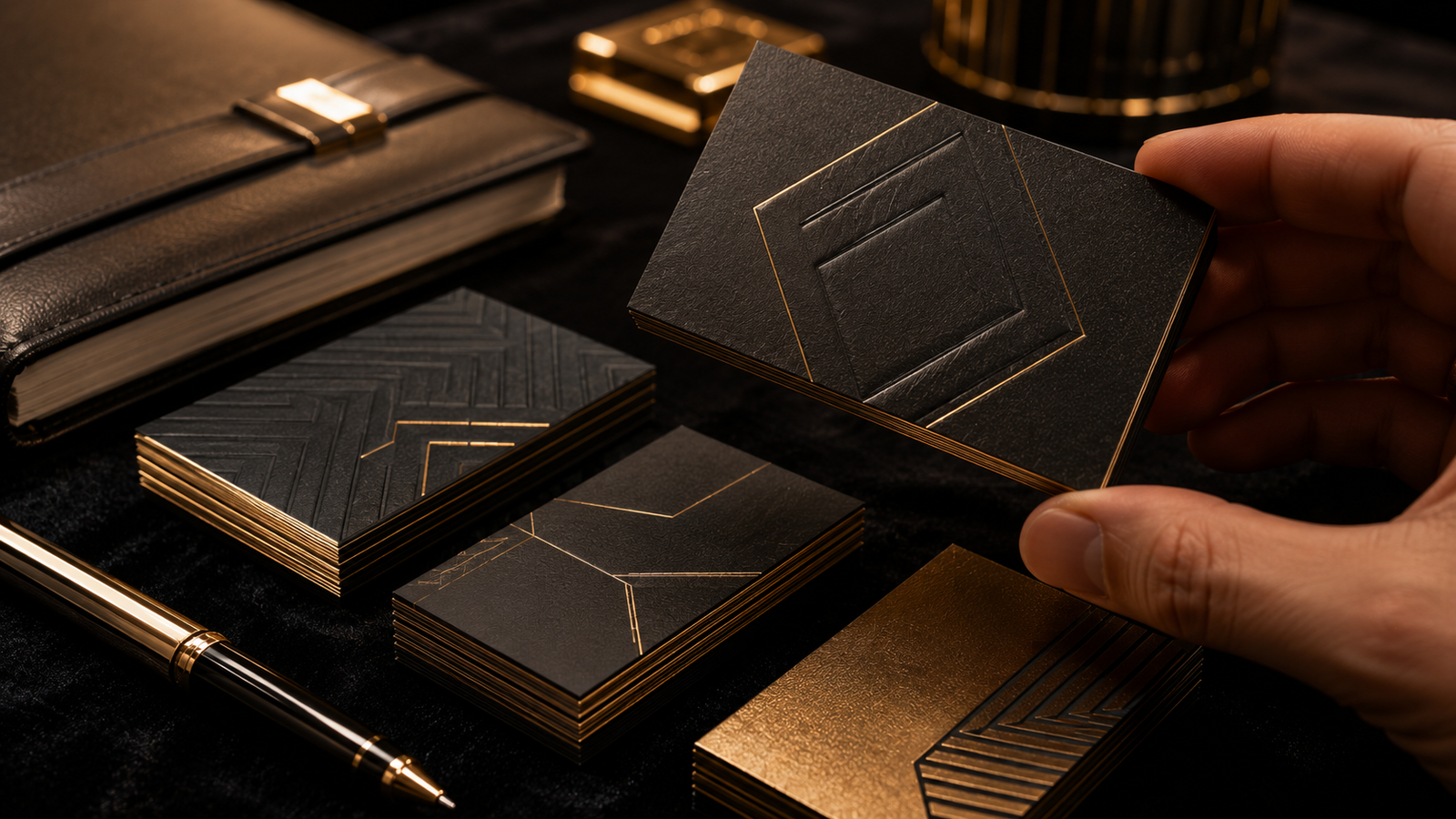
Before customers experience your business, they experience your business card — make every detail speak for your brand. In 2026, it is no longer just a small piece of paper with your contact details—it has become a powerful branding tool that communicates professionalism, creativity, and trust within seconds.
Modern businesses are investing more in premium business card printing because customers expect memorable brand experiences. Whether you’re a startup founder, real estate agent, lawyer, photographer, healthcare professional, or corporate executive, your business card should instantly reflect the quality of your business.
The biggest Business Card Design Trends 2026 focus on clean layouts, luxury finishes, sustainable materials, smart technology, and personalized branding. Features like QR codes, NFC chips, soft-touch lamination, spot UV, foil stamping, and premium paper stocks are becoming standard for businesses that want to stand out in competitive markets.
This comprehensive guide explores the latest business card trends, printing techniques, color choices, typography, premium finishes, and expert design strategies. You’ll also learn how to create business cards that leave lasting impressions while supporting your overall business branding and marketing efforts.
Whether you’re designing your first card or refreshing your company’s visual identity, this guide will help you choose a business card that looks modern, feels premium, and represents your brand with confidence.
What Are Business Card Design Trends 2026?
Business Card Design Trends 2026 emphasize minimalist layouts, premium printing finishes, eco-friendly materials, smart technologies like QR codes and NFC, bold typography, luxury paper stocks, and personalized branding. The goal is to create business cards that are visually impressive, memorable, and functional while strengthening brand identity.
What Are Business Card Design Trends?
Business card design trends refer to the latest visual styles, printing technologies, materials, layouts, and branding techniques businesses use to make a stronger first impression.
Unlike previous years, modern business cards are designed to do much more than share contact information. They are now an extension of your company’s identity and marketing strategy.
In 2026, successful business cards combine aesthetics with functionality. Designers focus on premium materials, clean typography, strategic white space, and interactive features such as QR codes or NFC technology to improve customer engagement.
Modern business card design also reflects current branding trends. Companies prefer simple yet elegant designs that communicate professionalism while remaining memorable.
Some of the biggest changes include:
- Luxury finishes
- Eco-friendly paper stocks
- Digital integration
- Minimalist layouts
- Premium textures
- Smart contact sharing
- Personalized branding
Businesses across the United States are increasingly choosing high-quality printing techniques that elevate their brand image and encourage long-term customer relationships.
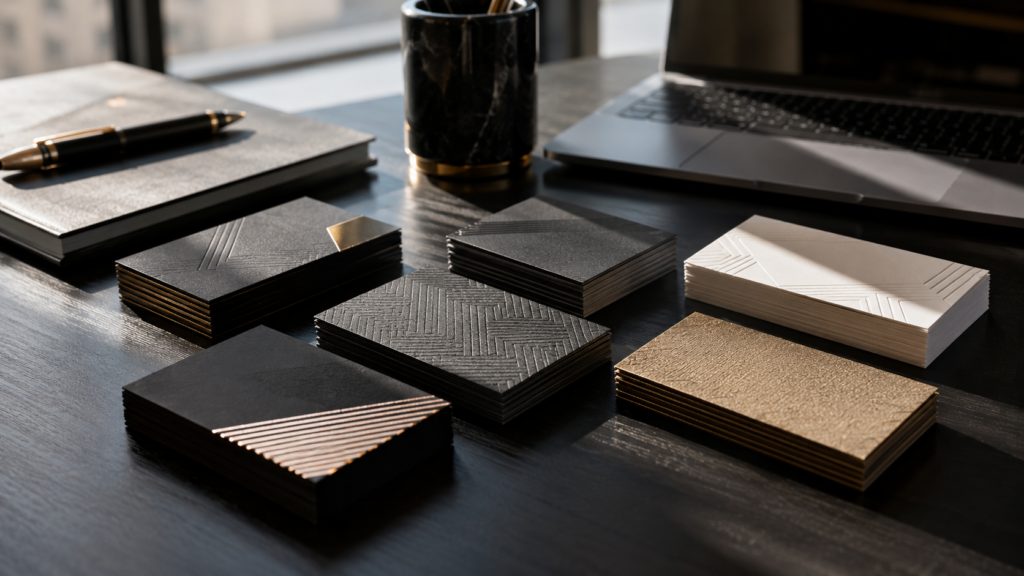
Why Business Card Design Matters in 2026
Despite digital communication becoming more common, business cards remain one of the most effective networking tools available.
A professionally designed business card creates credibility, increases brand recognition, and encourages meaningful conversations during networking events, conferences, trade shows, and business meetings.
First Impressions Matter
Studies consistently show that people form first impressions within seconds. A premium business card immediately communicates quality, professionalism, and attention to detail.
If your card feels cheap or outdated, potential customers may assume the same about your business.
Stronger Brand Recognition
Your business card represents your brand.
Elements like:
- Logo
- Brand colors
- Typography
- Paper quality
- Printing finish
all contribute to making your business more recognizable.
Consistency across your marketing materials helps build trust with customers.
Better Networking Results
Strong connections create strong opportunities, and a well-designed business card keeps your brand remembered long after the conversation ends.
Unlike exchanging phone numbers or social media profiles, handing someone a professionally printed business card creates a tangible connection.
People are far more likely to remember a premium business card than a digital contact.
Supports Your Marketing Strategy
Business cards complement your:
- Website
- Social media
- Brochures
- Flyers
- Packaging
- Email signature
- Sales presentations
They become an important part of your complete branding system.
Premium Cards Increase Perceived Value
Luxury finishes such as:
- Spot UV
- Foil Stamping
- Soft Touch Lamination
- Embossing
- Thick Card Stock
make customers associate your business with higher quality.
Premium presentation often influences purchasing decisions before a conversation even begins.
Top 20 Business Card Design Trends in 2026
The following trends are shaping modern business card printing across the United States.
1. Minimalist Design
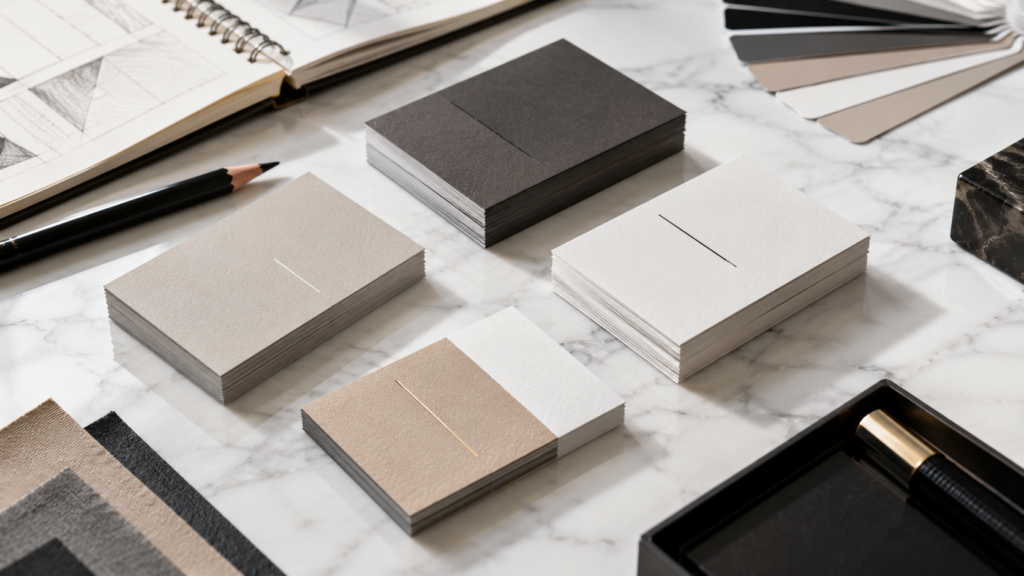
Minimalism continues to dominate graphic design in 2026.
Instead of filling every inch with information, businesses now embrace simplicity.
Characteristics include:
- Plenty of white space
- Clean layouts
- Simple color palettes
- Small logos
- Easy-to-read typography
Minimalist business cards feel modern, elegant, and premium.
Best for:
- Corporate brands
- Marketing agencies
- Consultants
- Law firms
- Technology companies
2. Premium Typography
Typography is becoming the focal point of modern business cards.
Rather than relying on heavy graphics, designers use carefully selected fonts to communicate personality.
Popular typography trends include:
- Large names
- Elegant serif fonts
- Clean sans-serif fonts
- High contrast layouts
- Custom lettering
Well-designed typography immediately improves readability and professionalism.
3. Matte Finish
Matte business cards remain one of the most popular choices for professionals.
Unlike glossy cards, matte finishes reduce glare and create a sophisticated appearance.
Benefits include:
- Elegant look
- Smooth writing surface
- Fingerprint resistance
- Professional feel
- Better readability
Matte cards work exceptionally well for luxury brands and corporate businesses.
4. Soft Touch Lamination
Soft-touch lamination creates a velvet-like texture that feels incredibly smooth.
This finish instantly makes a business card feel more luxurious and memorable.
Advantages include:
- Premium tactile experience
- Scratch resistance
- High durability
- Luxury appearance
- Excellent color reproduction
Soft-touch cards are especially popular among creative professionals and premium brands.
5. Spot UV
Spot UV is one of the most eye-catching printing techniques available.
It adds a glossy coating only to selected areas, such as:
- Logo
- Company name
- Icons
- Patterns
- QR codes
The contrast between matte and glossy surfaces creates an impressive visual effect that immediately attracts attention.
6. Foil Stamping for Luxury Business Cards
Foil stamping is one of the biggest Business Card Design Trends 2026 for brands that want a premium and luxurious appearance.
This printing technique applies a thin metallic layer onto specific areas of a business card, creating a reflective and high-end finish.
Popular foil colors include:
- Gold foil
- Silver foil
- Rose gold foil
- Copper foil
- Black foil
Foil business cards are commonly used by:
- Luxury brands
- Real estate companies
- Jewelry businesses
- Financial advisors
- Fashion companies
- Premium service providers
A simple design combined with gold foil on a logo or company name can create a strong visual impact without making the card look overcrowded.
7. Embossed Business Cards
Embossing is a printing technique where selected elements are raised above the surface of the card.
It creates a three-dimensional effect that customers can see and feel.
Common embossed elements include:
- Logos
- Brand names
- Icons
- Patterns
- Decorative elements
The tactile experience makes embossed business cards more memorable because customers physically interact with the design.
Embossing works especially well for:
- Luxury business cards
- Corporate identity materials
- Premium branding projects
- Creative agencies
8. Debossing for Modern Branding
Debossing creates the opposite effect of embossing.
Instead of raising the design, the artwork is pressed into the card surface to create a recessed appearance.
Debossed business cards offer:
- A unique premium texture
- Minimal luxury appearance
- Sophisticated branding
- Professional presentation
This style is becoming popular among companies that prefer subtle luxury instead of flashy designs.
9. Rounded Corner Business Cards
Traditional rectangular business cards are evolving.
Rounded corner business cards are becoming increasingly popular because they create a softer, modern appearance.
Benefits include:
- Unique visual appeal
- Less chance of damaged corners
- Contemporary look
- Better handling experience
Rounded corners are ideal for:
- Creative professionals
- Designers
- Photographers
- Beauty brands
- Marketing agencies
10. Die-Cut Business Cards
Die-cut business cards allow businesses to move beyond standard shapes.
Instead of a traditional rectangle, companies can create custom shapes that match their brand identity.
Examples include:
- Circular cards
- Product-shaped cards
- Logo-shaped cards
- Custom cut designs
Die-cut cards are excellent for businesses that want to create a memorable first impression.
Popular industries include:
- Restaurants
- Automotive businesses
- Real estate companies
- Creative agencies
- Fashion brands
However, the design should always maintain readability and professionalism.
11. Transparent Business Cards
Transparent business cards are becoming a modern choice for brands looking for a futuristic appearance.
These cards are usually created using clear plastic materials instead of traditional paper.
Advantages include:
- Unique appearance
- Water resistance
- Premium feel
- Long durability
Transparent cards work well for:
- Technology companies
- Luxury brands
- Beauty businesses
- Modern startups
A clean design with minimal text creates the best result.
12. Recycled Paper Business Cards
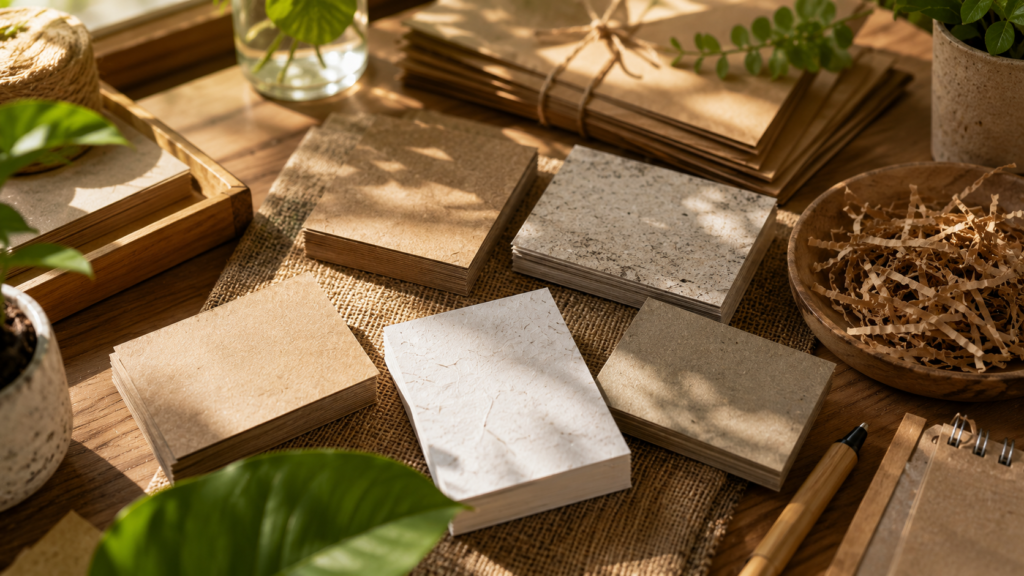
Sustainability is becoming a major factor in business branding.
In 2026, more companies are choosing eco-friendly business cards made from recycled materials.
Benefits include:
- Environmentally responsible branding
- Natural appearance
- Unique texture
- Strong brand values
Recycled paper business cards are especially suitable for:
- Green businesses
- Organic brands
- Sustainability-focused companies
- Nonprofit organizations
Modern customers are drawn to brands that make responsible choices and show genuine commitment toward protecting the environment.
13. Kraft Paper Business Cards
Kraft paper business cards continue gaining popularity because of their natural and handcrafted appearance.
The brown textured surface creates a warm and authentic feeling.
Kraft cards are commonly used by:
- Cafes
- Restaurants
- Handmade product brands
- Construction companies
- Eco-friendly businesses
They work best with:
- Black printing
- White ink
- Minimal logos
- Simple typography
14. NFC Business Cards
Technology integration is one of the biggest changes in modern business card design.
NFC business cards allow users to share contact information by simply tapping the card with a smartphone.
They can include:
- Website links
- Social media profiles
- Portfolio pages
- Contact details
- Appointment booking links
Benefits:
- Easy information sharing
- No manual typing
- Modern customer experience
- More measurable engagement
NFC business cards are becoming popular among:
- Sales professionals
- Entrepreneurs
- Consultants
- Digital agencies
15. QR Code Business Cards
QR code business cards continue to grow in popularity because they connect physical marketing with digital platforms.
A QR code can direct customers to:
- Website
- Online portfolio
- Google Business Profile
- Social media pages
- Product catalog
- Booking page
The best QR business cards combine technology with attractive design.
A QR code should never dominate the card. It should be integrated naturally into the layout.
16. Digital Business Cards
Digital business cards are becoming an alternative and complementary solution to traditional printing.
They allow professionals to instantly share their information through:
- Mobile apps
- Links
- QR codes
- NFC technology
However, physical business cards remain valuable because they create personal connections during networking.
Many successful businesses now combine:
Premium Printed Card + Digital Connection
This hybrid approach provides the best customer experience.
17. Thick Card Stock Business Cards
Premium thickness is one of the strongest indicators of quality.
In 2026, businesses are choosing heavier card stocks because they feel more valuable in the customer’s hand.
Popular thickness options include:
| Card Thickness | Appearance |
| 14pt | Standard professional card |
| 16pt | Premium everyday option |
| 18pt | Luxury feel |
| 32pt | Ultra-premium layered card |
Thicker cards are ideal for businesses that want to communicate trust and quality.
18. Black Luxury Business Cards
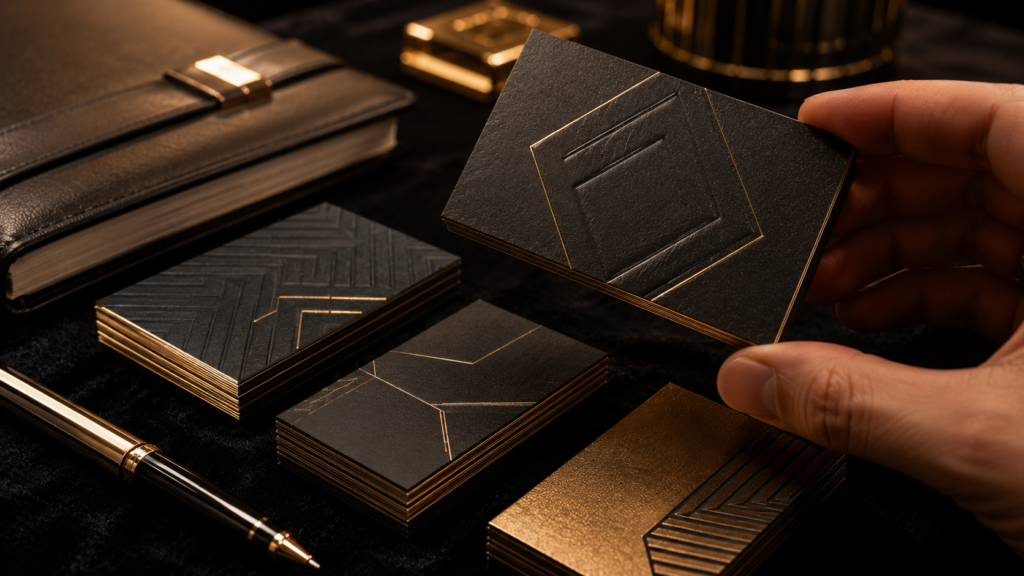
Black business cards remain a timeless luxury trend.
A dark background creates a powerful and premium appearance.
Popular combinations include:
- Black + Gold foil
- Black + Silver foil
- Black + White typography
- Black + Spot UV
Best suited for:
- Luxury services
- Real estate
- Automotive brands
- Fashion companies
- Executive professionals
19. White Space Design
White space, also known as negative space, is becoming a major design principle in 2026.
Instead of adding more elements, designers focus on creating balance.
Benefits include:
- Better readability
- Premium appearance
- Stronger visual hierarchy
- Modern branding
A clean design often creates a stronger impression than a complicated design.
20. AI-Assisted Personal Branding
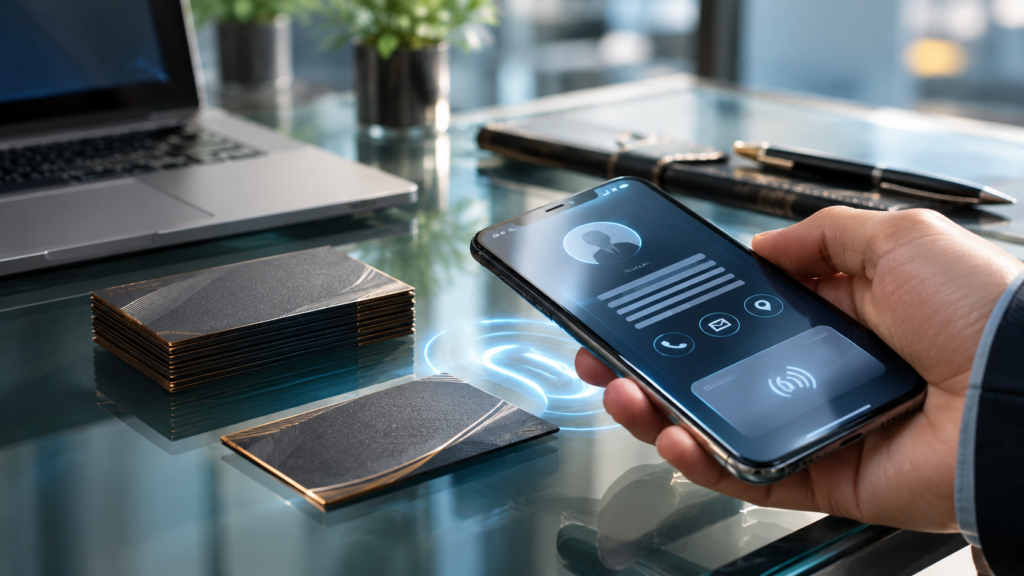
Artificial intelligence is influencing how businesses create branding materials.
In 2026, AI tools help businesses:
- Generate design concepts
- Test layouts
- Create personalized branding ideas
- Improve customer targeting
However, professional graphic design expertise remains important because successful business cards require strategic decisions about:
- Brand positioning
- Typography
- Colors
- Printing methods
- Customer psychology
AI helps speed up creativity, but human expertise creates meaningful designs.Best Business Card Colors for 2026
Colors strongly influence customer perception.
The right color combination helps communicate your brand personality.
Business Card Color Psychology Guide
| Color | Brand Message | Best For |
| Black | Luxury, power, confidence | Premium brands, executives |
| White | Clean, simple, professional | Corporate companies |
| Blue | Trust, reliability | Finance, technology |
| Green | Growth, nature | Healthcare, eco brands |
| Gold | Luxury, success | Jewelry, luxury services |
| Red | Energy, passion | Restaurants, entertainment |
| Brown | Authenticity, natural | Handmade brands |
| Purple | Creativity, premium | Beauty, creative businesses |
Most Popular Fonts for Business Cards in 2026
Typography plays a major role in professional business card design.
The best fonts balance personality with readability.
Trending Font Styles:
1. Modern Sans Serif Fonts
Examples:
- Helvetica
- Avenir
- Montserrat
- Futura
Best for:
- Technology
- Marketing
- Corporate brands
2. Elegant Serif Fonts
Examples:
- Playfair Display
- Baskerville
- Garamond
Best for:
- Luxury brands
- Law firms
- Fashion companies
3. Custom Typography
Custom lettering creates unique brand recognition.
It works especially well for:
- Creative agencies
- Restaurants
- Personal brands
Business Card Size Guide
The standard business card size in the United States is:
3.5 × 2 inches
This size fits easily into wallets and card holders.
Common Business Card Sizes
| Region | Size |
| USA & Canada | 3.5 × 2 inches |
| Europe | 3.35 × 2.17 inches |
| Japan | 3.58 × 2.17 inches |
Business Card Paper Types
Choosing the right paper stock affects how your business card looks and feels.
Popular Paper Options:
| Paper Type | Features |
| Matte Card Stock | Smooth, professional finish |
| Gloss Card Stock | Bright colors and shine |
| Kraft Paper | Natural appearance |
| Recycled Paper | Eco-friendly option |
| Textured Paper | Premium tactile experience |
| Velvet Paper | Luxury soft-touch feeling |
Business Card Finish Comparison Table
The finishing technique you choose can completely change the appearance and feel of your business card. In 2026, businesses are moving toward premium business card finishes that create stronger brand impressions.
| Business Card Finish | Appearance | Benefits | Best For |
| Matte Finish | Smooth and elegant | Professional look, easy readability | Corporate brands, consultants |
| Gloss Finish | Shiny and vibrant | Makes colors pop | Creative businesses, photographers |
| Soft Touch Lamination | Velvet-like texture | Premium feel and durability | Luxury brands |
| Spot UV | Glossy highlighted areas | Adds visual contrast | Logos and premium branding |
| Foil Stamping | Metallic effect | Creates luxury appearance | Real estate, fashion, finance |
| Embossing | Raised design | Adds texture and depth | Premium corporate cards |
| Debossing | Pressed-in design | Subtle luxury effect | Minimal brands |
| Letterpress | Classic pressed style | Unique handcrafted feel | Boutique businesses |
Printing Techniques Explained
Modern business card printing combines traditional craftsmanship with advanced technology.
Understanding printing techniques helps businesses choose the right option based on their budget, industry, and branding goals.
Digital Printing
Digital printing is one of the most common methods for custom business cards.
Advantages:
- Affordable for small quantities
- Fast turnaround time
- Excellent color accuracy
- Ideal for startups
Best for:
- Small businesses
- New companies
- Personal branding
Offset Printing
Offset printing is preferred for large-volume professional printing projects.
Benefits:
- Superior color consistency
- High-quality results
- Professional finish
Best for:
- Large companies
- Corporate orders
- Marketing campaigns
Letterpress Printing
Letterpress printing creates a traditional premium appearance by pressing designs into paper.
It provides:
- Handmade appearance
- Elegant texture
- Luxury branding experience
Commonly used by:
- Wedding professionals
- Luxury brands
- Creative businesses
Digital Foil Printing
Digital foil printing allows businesses to add metallic effects without traditional foil stamping processes.
Benefits:
- Faster production
- Custom designs
- Premium appearance
Popular choices:
- Gold foil
- Silver foil
- Rose gold foil
UV Printing
UV printing uses ultraviolet light to instantly cure ink onto the card surface.
Advantages:
- Sharp details
- Vibrant colors
- Durable printing quality
Suitable for:
- Custom graphics
- Logos
- Modern designs
Luxury vs Standard Business Cards
Choosing between standard and luxury business cards depends on your brand goals.
Comparison Table
| Feature | Standard Business Cards | Luxury Business Cards |
| Paper Quality | Regular stock | Premium thick stock |
| Finish | Matte or gloss | Soft touch, foil, embossing |
| Thickness | 14pt-16pt | 18pt-32pt |
| Design | Simple layouts | Custom premium designs |
| Brand Impact | Professional | High-end impression |
| Cost | Affordable | Higher investment |
Luxury business cards are not just about appearance. They communicate confidence, professionalism, and attention to detail.
For industries where trust and reputation matter, premium cards can create a stronger customer connection.
Business Card Mistakes to Avoid in 2026
Even a beautifully printed card can fail if the design strategy is wrong.
Avoid these common mistakes:
1. Adding Too Much Information
A business card should not look like a brochure.
Avoid overcrowding with:
- Too many services
- Long descriptions
- Excessive social links
- Unnecessary details
Focus on:
- Name
- Company
- Contact information
- Website
- Brand identity
2. Using Low-Quality Images
Poor-quality logos and images reduce professionalism.
Always use:
- High-resolution logos
- Vector files
- Professional graphics
3. Choosing Difficult Fonts
Creative fonts may look attractive but can reduce readability.
Your information should be easy to read within seconds.
4. Ignoring Brand Consistency
Your business card should match your:
- Website
- Packaging
- Social media
- Marketing materials
Consistent branding increases trust.
5. Selecting Cheap Materials for Premium Brands
A luxury business should not use low-quality printing.
The card quality should match the value of your services.
Business Card Design Tips for Small Businesses
Small businesses can compete with larger companies by using strategic business card designs.
Tip 1: Highlight Your Brand Personality
Your business card should communicate who you are.
Examples:
- Creative company → bold design
- Law firm → elegant and professional
- Restaurant → attractive colors and unique style
Tip 2: Add a QR Code
A QR code can connect customers directly to:
- Website
- Portfolio
- Booking page
- Social media
This makes your physical card more interactive.
Tip 3: Invest in Quality Printing
A premium card creates better customer perception.
Consider:
- Thick paper stock
- Matte finish
- Spot UV
- Foil stamping
Tip 4: Keep the Design Simple
Modern business cards prioritize clarity.
A clean design usually creates a stronger impact than a crowded layout.
Industry-Specific Business Card Design Ideas
Different industries require different branding approaches.
Real Estate Business Cards
Real estate professionals should focus on trust and professionalism.
Recommended styles:
- Luxury black cards
- Gold foil logos
- Premium typography
- Property QR codes
Best finishes:
- Matte
- Soft touch
- Spot UV
Law Firm Business Cards
Law firms need authority and credibility.
Recommended:
- Clean layouts
- Dark colors
- Elegant fonts
- Minimal designs
Best colors:
- Navy blue
- Black
- White
- Gray
Restaurant Business Cards
Restaurants can use creative designs to attract attention.
Ideas:
- Food-inspired colors
- Unique shapes
- QR menus
- Premium textures
Healthcare Business Cards
Healthcare brands should communicate trust and professionalism.
Recommended:
- White space
- Blue or green colors
- Clear typography
Suitable for:
- Doctors
- Clinics
- Dentists
- Wellness brands
Construction Business Cards
Construction companies benefit from strong and durable designs.
Recommended:
- Bold typography
- Strong colors
- Thick card stock
Photographer Business Cards
Photography businesses should showcase creativity.
Ideas:
- Portfolio QR code
- Unique layouts
- Premium paper
- Image-focused designs
Marketing Agencies
Marketing agencies should demonstrate creativity.
Recommended:
- Modern typography
- Experimental layouts
- Unique printing effects
Finance Businesses
Finance companies should focus on trust.
Recommended:
- Professional colors
- Minimal designs
- Premium finishes
Beauty Industry
Beauty brands benefit from elegant and luxurious designs.
Popular choices:
- Soft colors
- Gold foil
- Feminine typography
- Premium textures
Automotive Businesses
Automotive brands can use bold designs.
Recommended:
- Black backgrounds
- Metallic finishes
- Strong typography
Business Card Trends Comparison: 2024 vs 2025 vs 2026
| Year | Main Trend Focus |
| 2024 | Digital integration and minimalist designs |
| 2025 | Premium finishes and personalized branding |
| 2026 | Smart technology, sustainability, luxury printing |
The biggest change in 2026 is the combination of physical quality with digital experiences.
Modern business cards are becoming:
- More interactive
- More sustainable
- More personalized
- More premium
The Future of Business Cards
Many people predicted that digital communication would replace printed business cards completely.
However, the opposite is happening.
Businesses are now using printed cards as premium branding tools.
The future of business cards includes:
- NFC technology
- Smart QR integration
- Sustainable materials
- Personalized designs
- Premium textures
- Interactive experiences
The most successful brands will combine traditional printing quality with modern technology.
Frequently Asked Questions (FAQs)
1. What are Business Card Design Trends 2026?
Business Card Design Trends 2026 include minimalist layouts, premium finishes, sustainable materials, QR codes, NFC technology, luxury typography, and personalized branding.
2. Which business card style is most popular in 2026?
Minimalist premium business cards with matte finishes, elegant typography, and subtle luxury elements are among the most popular styles.
3. Are QR code business cards worth it?
Yes. QR code business cards make it easier for customers to access websites, portfolios, social media, and digital contact information.
4. What paper is best for business cards?
Premium cardstock between 16pt and 32pt is ideal for professional business cards because it provides durability and a high-quality feel.
5. What business card finish lasts longest?
Soft-touch lamination, matte finishes, and premium coatings provide excellent durability and protection.
6. Are luxury business cards worth the investment?
Yes. Luxury business cards create stronger impressions and help premium brands communicate quality.
7. What size are standard business cards in the USA?
The standard US business card size is 3.5 × 2 inches.
8. Should business cards have QR codes?
QR codes are recommended because they connect physical marketing with digital platforms.
9. Are NFC business cards replacing printed cards?
NFC cards are becoming popular, but many businesses still prefer combining NFC technology with premium printed cards.
10. What colors work best for business cards?
Black, white, blue, green, and gold are popular choices depending on industry and brand personality.
11. How thick should a premium business card be?
Premium cards usually range from 18pt to 32pt thickness.
12. What makes a business card look expensive?
Premium paper, clean design, foil stamping, embossing, and professional typography create a luxury appearance.
13. Are recycled business cards popular?
Eco-conscious businesses are choosing recycled paper business cards to reflect their dedication to sustainable practices while building a brand image centered around environmental responsibility and thoughtful choices.
14. Should business cards match branding?
Yes. Consistent branding improves recognition and customer trust.
15. Where can I print custom business cards?
Professional printing companies like Ri Printer provide custom business card printing with premium finishes and professional quality.
Expert Tips for Creating Better Business Cards in 2026
✔ Keep designs simple and memorable
✔ Use premium materials
✔ Match your brand identity
✔ Add digital features strategically
✔ Choose readable typography
✔ Invest in professional printing
✔ Focus on customer experience
A great business card is not just printed material. It is a physical representation of your business.
Conclusion
The latest Business Card Design Trends 2026 show that business cards are becoming more creative, premium, and technology-driven than ever before.
Modern businesses are moving beyond basic contact cards and creating memorable branding experiences through luxury finishes, sustainable materials, smart technology, and professional design.
Whether you need minimalist business cards, luxury foil cards, QR code cards, or premium corporate printing, choosing the right design and printing partner can make a significant difference.
Ri Printer helps businesses create high-quality custom business cards designed to make strong first impressions and support professional branding.
From premium paper stocks to advanced printing finishes, your business card can become one of your most powerful marketing tools.
Create a business card that represents your brand with confidence. Choose professional custom printing with Ri Printer today.


